Please Wait...








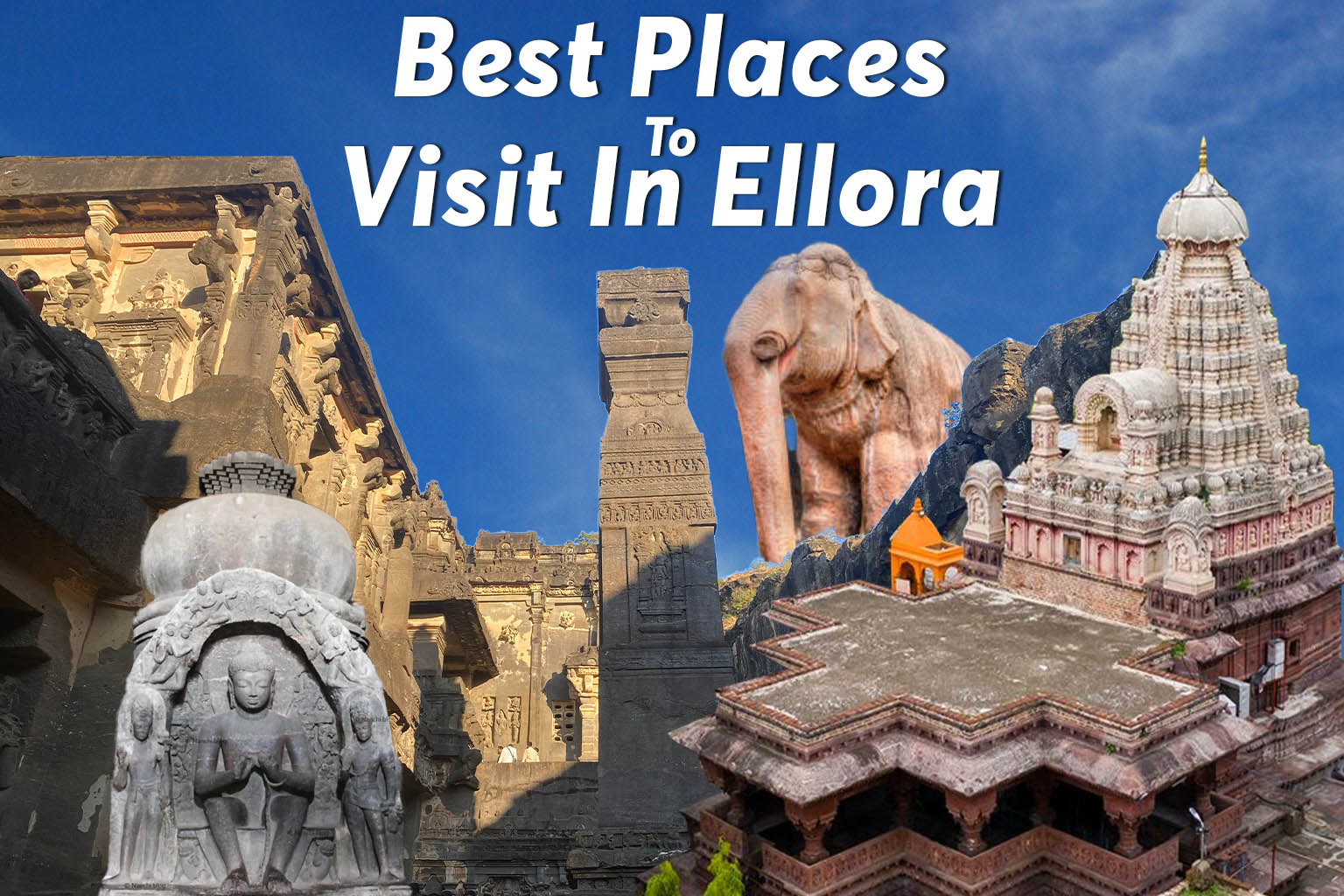
Ellora is a historic destination in Maharashtra that portrays the brilliance of ancient Indian architecture and spiritual traditions. It is well known for the iconic Ellora Caves, a UNESCO World Heritage Site and includes rock cut architectural style temples & monasteries. These caves were carved between the 6th & 10th centuries, representing India’s religious heritage. Apart from the caves, Ellora has several nearby attractions including temples, forts and more. Exploring the places to visit in Ellora offers a perfect blend of spirituality, history and architectural wonder.
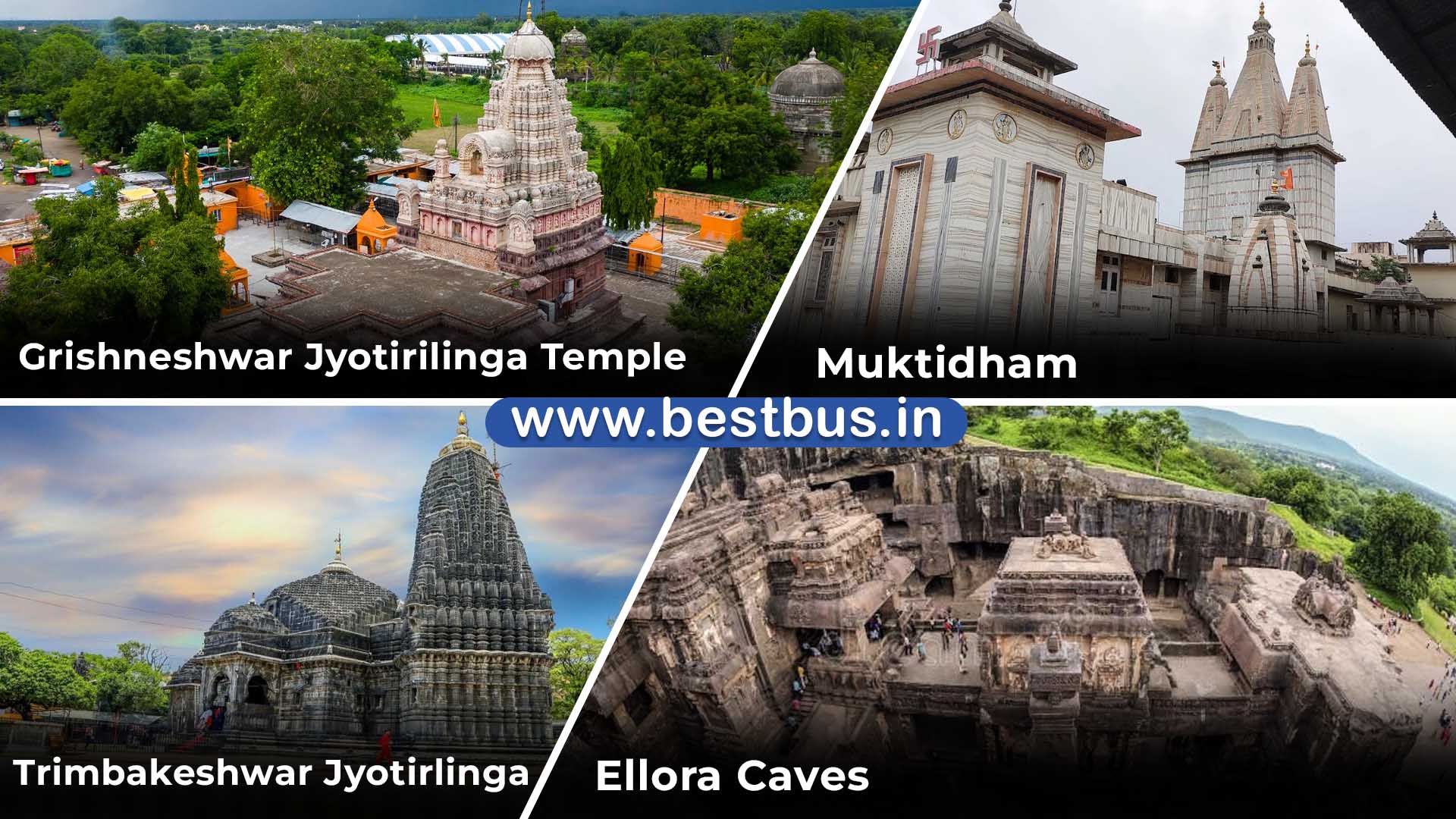
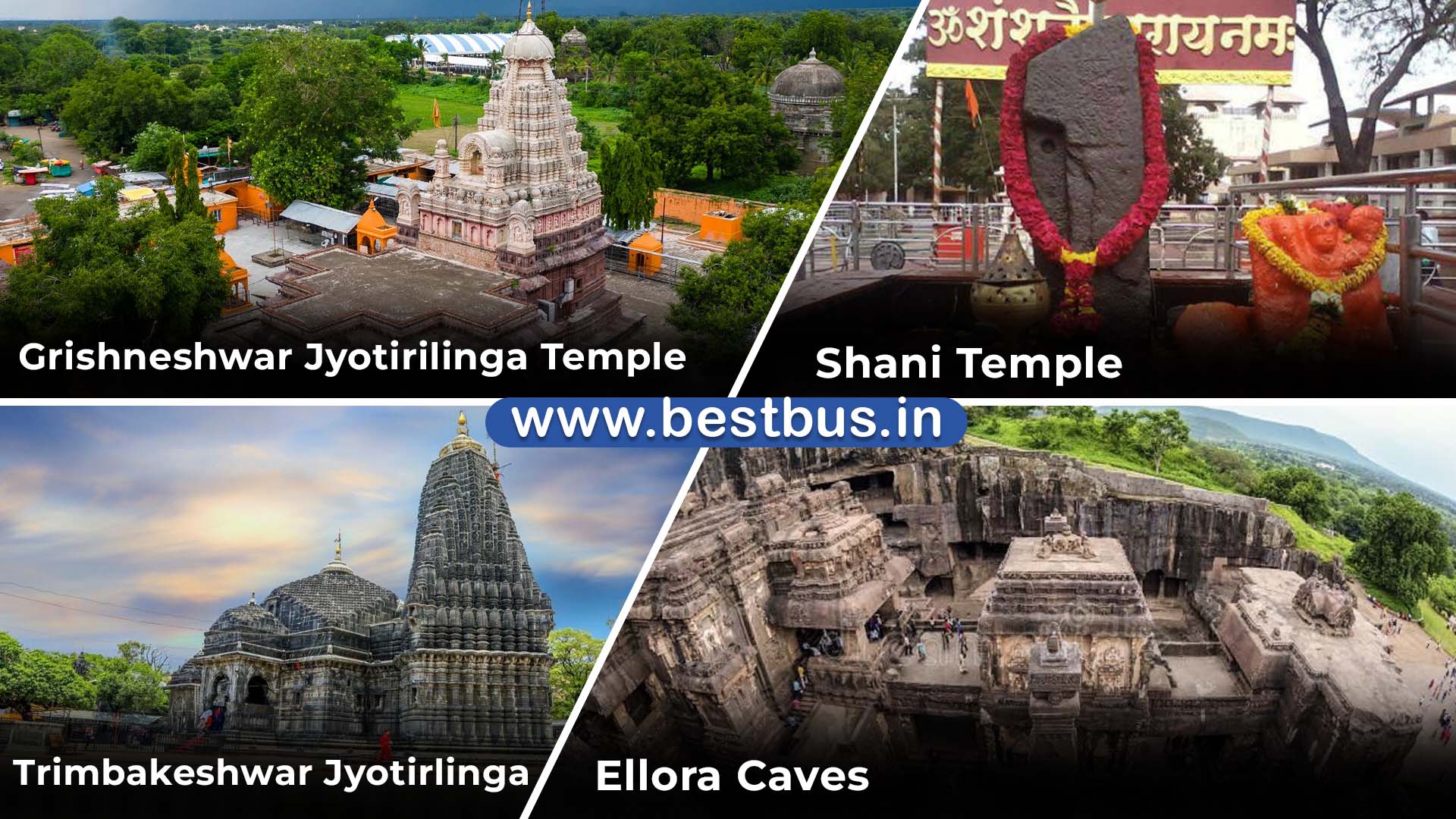
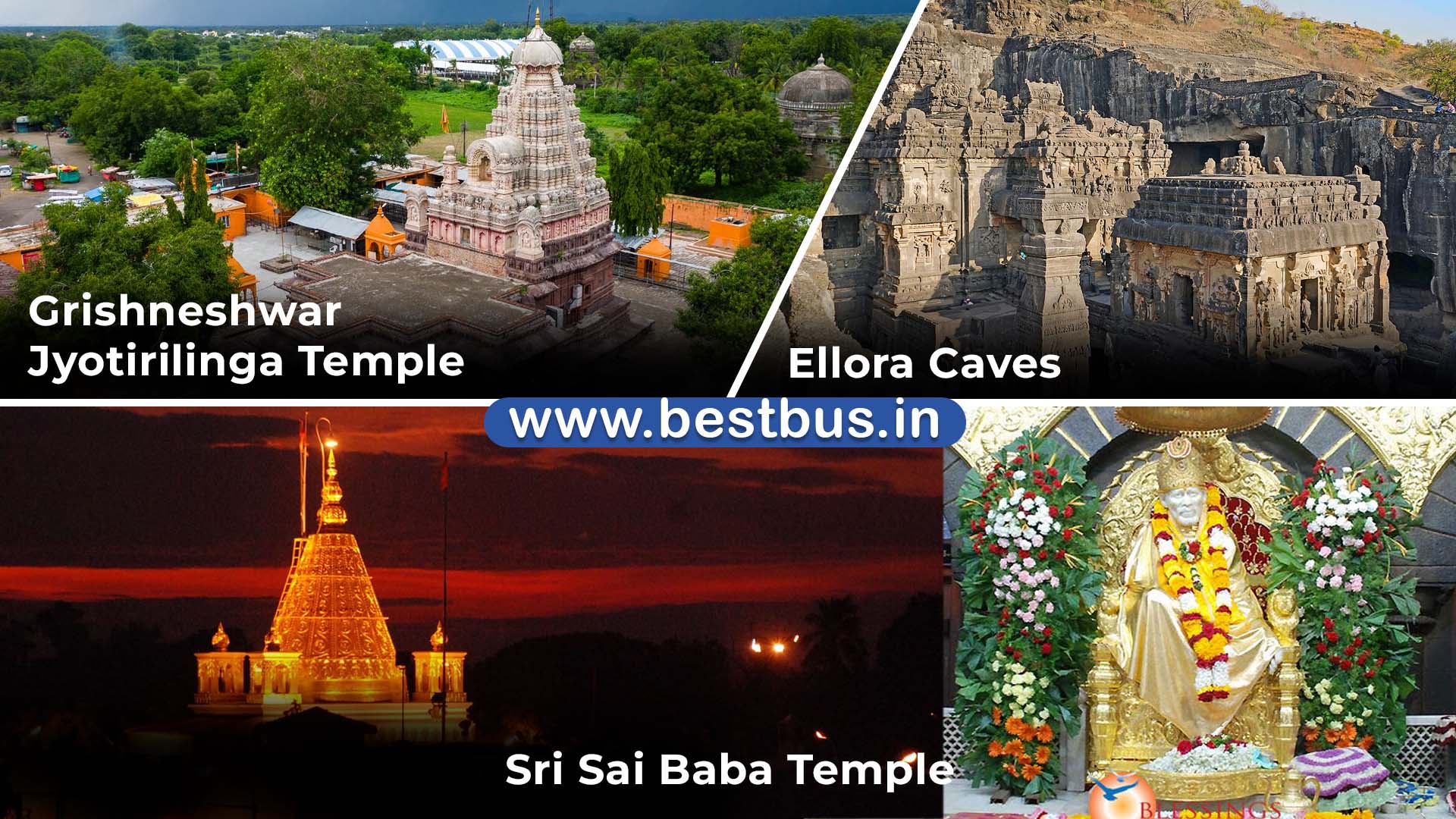
The Grishneshwar Jyotirlinga temple, is one of the 12 Jyotirlinga temples dedicated to lord Shiva. It is also called Ghushmeshwar temple or Gharneshwar temple. This temple was built of red stone and has a five tiered tower structure. It is said that Ahalyadevi Holkar renovated this temple and the idols of ten avatars are carved on a stone slab at the mid level of the temple.
Ellora is also referred to as Verul or Elura and has the ancient name Elloorpuram. Ellora caves are a UNESCO World Heritage Site and one of India’s perfect examples of ancient architectural styles. There are more than 100 caves and 34 out of these are open for visitors. These 34 caves include 17 Hindu cave temples, 12 Buddhist cave temples and 5 Jain cave temples as well as monasteries of each religion. They were built during the Rashtrakuta dynasty and the Yadava dynasty.
Kailash temple is one of the cave temples located in Ellora and is one of the ancient Hindu temples with rock cut architecture. It is considered one of the most impressive cave temples with 276 feet length and 154 feet width. To build this single rock cut temple, around 400,000 tons of rock were cut & shaped for more than a hundred years.
It is one of the Buddhist Caves and is a chaitya(buddhist prayer hall) worship hall which was built around 650 CE. It is also known as the “Carpenter’s Cave” for its appearance as wooden beams. It includes a 15 feet Buddha statue in a meditating pose.
This cave also includes gavaksha & chadrashala, and has a connection to Ellora cave 9 side ways.
The Indra Sabha was cut and shaped in the 9th century and is a two stepped cave with a monolithic(single rock cut) shrine. Indra is an important deity in all religions and has particular importance in Jain religion. It includes many beautiful & attractive carvings inside the temple such as lotus flower, image of Ambika, the yakshi of Neminath, seated on her lion under a mango tree. The centre of the shrine presents Sarvatobhadra, where four tirthankaras of Jainism namely Rishabhanatha, Neminatha, Parshavanatha & Mahavira.
Do Thal is cave 11 in Ellora caves which is a large multi stepped Buddhist monastery including detailed rock cut carvings of Buddha and other deities. Do Thal means “ two floors” but the cave actually has three levels which also makes it known as Teen Thal. This large complex contains a courtyard, pillared verandahs & shrines. It displays Buddha in various hand mudras and reflects Tantric Buddhist themes.
Dasavatara Cave temple is one of the significant cut and shape temples which includes cells and a layout plan that are similar to Buddhist Caves 11 and 12. This temple has an open court with a free standing monolithic mandapa in the middle. A carved writing of Dantidurga, which helps identify the age of the temple, can be seen on the back wall of the front hall. According to Coomaraswamy, this cave shows the story of Hiranyakashipu’s death, where lord Vishnu appears as Narasimha, coming out of a pillar and defeating him.
Cave 21 in Ellora is also called Rameshwar Lena, is another early excavation(carving work) which was built in Kalachuris of Mahishmati dynasty. It depicts the story of goddess Parvati’s search for lord Shiva, carvings depicting Parvati & Shiva at leisure, Parvati’s wedding. Also, it displays Sapta Matrika, the seven mother goddesses of the Shakti tradition.
The Jagannatha Sabha is the second largest Jain cave at Ellora and dates to the 9th century according to the inscriptions on the pillars. It is a two layered cave with 12 massive pillars and elephant heads projecting towards a porch, all carved from a single rock. The hall has two heavy square pillars in front, four in the middle area and a pillared interior square hall with fluted shafts. This temple houses major idols like Parshavanatha and Mahavira, the last two tirthankaras in Jainism.
The Chhota Kailasha, or the little Kailasha, is so named due to the similarity of the carvings to those in the Kailasha temple. This temple was likely built in the early 9th century. It includes two larger statues of dancing Indra, one with eight arms and another with twelve, both decorated with ornaments and a crown. India’s arms are shown in various mudras of the dancing Shiva artworks found in nearby Hindu caves.
The Tomb of the Mughal Emperor near Ellora is a historical monument that reflects the architectural style of the Mughal period. It was built with arches and a dome, the tomb stands as a reminder of the Mughal presence in the region and adds historical value to the Ellora.
The Malik Ambar Tomb is an important historical monument near Ellora, dedicated to Malik Ambar, a powerful military leader and administrator of the Deccan. It is known for its strong & simple architecture, the tomb reflects his influence and role in the region’s history.
A visit to Ellora is a journey through time, where rock cut caves, ancient temples and historic tombs reveal stories carved in stone. From the greatness of the Kailasa temple to the peaceful Jain & Buddhist caves, Ellora leaves visitors with a deep appreciation for India’s architectural and spiritual heritage.
 Bus
Bus  Sightseeing
  Hotel
Hotel  Car
Sightseeing
Hotel
Bus
Sightseeing
Hotel
Car
Sightseeing
Car
Sightseeing
Hotel
Car
Sightseeing
Hotel
Bus
Sightseeing
Hotel
Car
Sightseeing
Car
Sightseeing
Hotel